Tuesday School: A Bold Chalkboard Display Font for Editorial Design
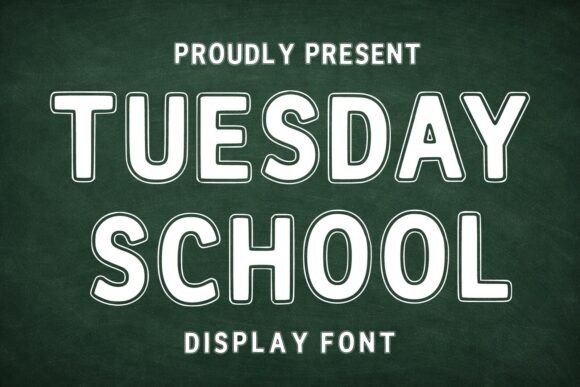
The cursor blinked on the blank page, a quiet reminder that the digital magazine layout was due in forty-eight hours. The design team had settled on a clean, minimalist aesthetic for the main articles, but the cover story needed something with more texture, something that felt tactile and grounded. We needed a typeface that could bridge the gap between modern digital readability and the nostalgic warmth of a physical classroom. That is when we turned to Tuesday School, a bold chalkboard-style display font inspired by classic classroom lettering. It wasn’t just about finding letters; it was about finding a voice that could command attention without shouting.
Tuesday School as a Bold Chalkboard-Style Display Font for Educational Branding
When evaluating Tuesday School, the first thing that strikes you is its distinct personality. As a Display typeface, it does not attempt to hide behind subtlety; instead, it leans into its identity with confidence. The font features clean outlines and a hand-drawn feel that mimics the imperfections of real chalk on slate, yet it retains the structural integrity required for professional publishing. This balance makes it an exceptional choice for educational branding, where the goal is often to appear approachable and authoritative simultaneously.
In our recent project redesigning a coaching workbook, we tested several handwritten fonts, but many felt too chaotic or difficult to read at smaller sizes. Tuesday School offered a solution. Its slightly irregular strokes give it character, but the consistent weight ensures that headlines remain legible even when scaled down for mobile devices. For creators building brand identities around learning, growth, or community, this font provides a visual anchor that feels both timeless and contemporary. It signals to the reader that the content inside is crafted with care, much like a teacher preparing a lesson plan with precision and passion.
Using Tuesday School for Newsletter Graphics and Digital Magazines
One of the most effective ways to utilize Tuesday School is within email marketing and newsletter design. In a crowded inbox, visual hierarchy is everything. We found that using this font for the header graphic or the primary pull quote significantly increased engagement rates compared to standard sans-serif headers. The "school" theme evokes a sense of structure and clarity, which subconsciously reassures the subscriber that the information they are about to consume is organized and valuable.
For digital magazine layouts, the font works beautifully as a decorative accent. We used it sparingly for section dividers and chapter openers, pairing it with a highly readable serif font for the body copy. This combination created a sophisticated editorial mood, reminiscent of high-quality print publications from the mid-20th century. The contrast between the rough, textured look of the display font and the smooth lines of the body text creates a dynamic reading experience. It breaks up dense blocks of text and guides the eye naturally through the article, ensuring that readers stay engaged from the headline to the final paragraph.
Tuesday School for Printable Planners and Worksheet Layouts
The versatility of Tuesday School extends beyond digital screens into the realm of tangible products. For independent sellers creating printable planners, worksheets, and course PDFs, this font offers a unique selling proposition. The hand-drawn aesthetic adds a personal touch that mass-produced templates often lack. When designing a weekly planner or a student study guide, the slight variations in the letterforms make each element feel custom-made.
We tested the font in various weights and sizes for a series of educational worksheets. While it performed excellently for titles and instructions, we noted that it should be avoided for long-form body text. The expressive nature of the characters can become fatiguing if used for extended reading sessions. Instead, reserve Tuesday School for key takeaways, step-by-step headers, and motivational quotes within the document. This strategic use maintains the font’s impact while preserving readability for the user.
Pairing Tuesday School with Serif and Sans Serif Fonts
A critical aspect of successful typography is knowing what not to pair with your chosen display font. Because Tuesday School is already a strong statement piece, it requires complementary typefaces that provide stability and contrast. In our editorial design workflow, we consistently paired it with a classic serif font for body copy. The elegance of the serif balances the rustic charm of the chalkboard style, creating a harmonious visual language that feels both intellectual and accessible.
For UI elements, such as navigation menus or button labels, a clean sans serif font proved to be the best partner. The geometric simplicity of the sans serif contrasts sharply with the organic curves of Tuesday School, allowing the display font to stand out as the focal point. This technique is particularly effective in web design and social media graphics, where quick scanning is essential. By limiting the use of the display font to headlines and major accents, we ensured that the overall design remained clean and uncluttered.
Tuesday School for Wedding Invitations and Elegant Branding
While the name suggests education, the aesthetic of Tuesday School lends itself surprisingly well to other niches, including wedding invitations and elegant branding. The soft, hand-drawn quality evokes a sense of romance and nostalgia, making it suitable for rustic or vintage-themed events. However, caution is advised. The font’s boldness means it should be used sparingly in these contexts. We recommend using it for the couple’s names or the event date, while relying on delicate script or thin serif fonts for the rest of the invitation details. This approach ensures that the design remains legible and sophisticated, avoiding the risk of looking too casual or informal.
Practical Considerations for Commercial Use and Licensing
Before integrating Tuesday School into any commercial project, it is essential to review the specific licensing terms. As a premium font, it typically comes with clear guidelines regarding usage in digital downloads, print materials, and client work. Ensure that the license covers your intended use cases, whether you are selling ebooks, creating paid newsletters, or designing assets for clients. Additionally, check for included styles, alternates, and ligatures, as these features can greatly enhance the typographic flexibility of the font.
File formats are another practical consideration. Most modern font packages include .otf and .ttf files, which are compatible with major design software like Adobe InDesign, Illustrator, and Canva. Verifying multilingual support is also crucial if your content targets international audiences. By taking these steps, you ensure that Tuesday School integrates smoothly into your workflow, allowing you to focus on creativity rather than technical hurdles.
Final Typography Choices for Content Creators
Selecting the right typeface is one of the most impactful decisions in editorial design. Tuesday School offers a compelling blend of nostalgia and modernity, making it a versatile tool for bloggers, publishers, and designers. Its ability to convey warmth and authority simultaneously allows it to elevate a wide range of projects, from educational worksheets to lifestyle blog headers. By understanding its strengths and limitations, and by pairing it thoughtfully with other typefaces, you can create designs that are not only visually striking but also deeply engaging for your audience.