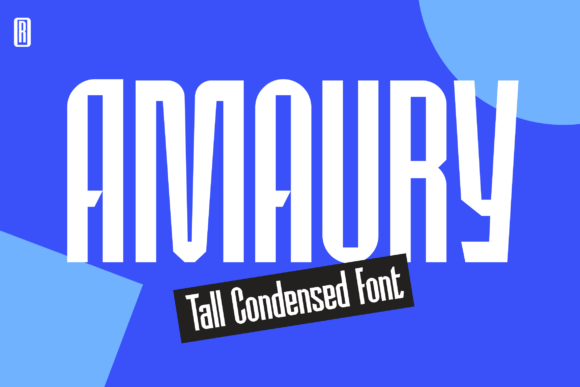
Amaury Font Review: A Display Typeface for Space-Saving Branding
There I was, staring at a blank brand board on my screen, trying to visualize the identity for a new local café. The client wanted something modern but warm, something that could work across packaging, signage, and social media without losing its charm. That’s when I opened up Amaury — a tall condensed sans-serif font designed with narrow proportions and strong vertical emphasis — and everything clicked into place.
Amaury as a Logo Font for Boutique Brands
I’ve tested plenty of display fonts in logo design, but Amaury stands out for how it balances boldness with clarity. Its narrow structure makes it perfect for logos where space is tight — think of a small bakery sign or a minimalist coffee shop emblem. I tried it on a mockup of a café logo with a short name and found that its vertical emphasis gave the brand an elegant yet approachable feel. Unlike some overly stylized typefaces, Amaury maintains consistent stroke weights and clean lines, making it surprisingly versatile even in high-contrast applications like white-on-black signage.
Using Amaury in Packaging Design and Product Labels
One of the first things I noticed about Amaury is how efficiently it fits within limited spaces. For a recent skincare product mockup, I needed a font that could convey sophistication while fitting neatly on bottle labels and back-of-box descriptions. Amaury worked wonders here. Its condensed nature meant I could use larger point sizes without overcrowding the layout, and the tall x-height kept the text legible even at smaller sizes. When paired with subtle line spacing and a muted background, it added just the right amount of visual weight without overwhelming the design.
Realistic Use in a Handmade Shop Identity
I applied Amaury to a branding project for a handmade candle seller who wanted a modern but artisanal look. The font’s structured geometry brought a sense of professionalism to their label designs, while the narrow proportions allowed me to include more information on each tag. It also translated well into business cards, where I used it in a stacked layout to highlight key elements like the brand name and tagline. The result felt both refined and personal — exactly what the client needed to stand out in a crowded market.
Amaury in Web Design and Social Media Layouts
As a display font, Amaury is particularly effective for digital branding. On a homepage hero section, it made a bold statement without feeling too heavy. I used it for a creative studio website, where it helped establish a confident and contemporary tone. In social media graphics, especially Instagram posts and Pinterest banners, Amaury’s clean form ensured that headlines were instantly readable and visually striking. It doesn’t get lost in grids or feeds, which is essential for catching attention in fast-scrolling environments.
Performance in Website Headers and Short Phrases
I often use display fonts for headers rather than body copy, and Amaury fits this role perfectly. Whether it was a landing page headline or a call-to-action button, the font’s strong vertical presence created a clear visual hierarchy. I also experimented with using it in short taglines and found that it maintained readability and impact even when layered over images or gradients. This makes it ideal for designers working on websites or digital campaigns that need a punchy, premium font without compromising usability.
Font Pairing Ideas with Amaury
Display fonts like Amaury can sometimes be tricky to pair, but in this case, it plays nicely with others. I matched it with a serif font for a publishing project — using Amaury for chapter titles and the serif for body text. The contrast between the two styles elevated the editorial design, giving it a balanced and modern aesthetic. Similarly, I paired it with a script font for a wedding invitation suite, where Amaury provided a structured base and the script added elegance and softness. Just be careful not to mix it with other condensed or highly decorative display fonts; Amaury has enough character on its own.
Best Companions for Amaury in Brand Systems
- Sans Serif Fonts: Great for supporting typefaces that maintain a similar modern tone.
- Handwritten Fonts: Useful for adding warmth and personality in secondary uses like taglines or captions.
- Classic Serifs: Perfect for editorial or content-heavy projects where Amaury handles the headlines.
When Amaury Might Not Be the Best Choice
While Amaury shines in many areas, it’s not a one-size-fits-all solution. Its narrow proportions and tall structure aren’t suited for long paragraphs or dense body text. I once tried using it for a product description on a website and quickly realized it wasn’t the best fit — it looked cramped and hard to read. Similarly, if you’re designing for a formal corporate setting, you might want to consider a more neutral typeface. Amaury leans into creativity and visual flair, so it works better for lifestyle brands, fashion identities, or any project that needs a strong typographic presence.
Testing Amaury Before Finalizing a Brand Project
If you're considering Amaury for your next branding job, I recommend testing it in multiple formats before locking it in. Try it on a business card mockup, a packaging layout, and a website header to see how it behaves in different contexts. I always create a quick brand style guide using sample assets to ensure consistency across all touchpoints. You’ll quickly notice whether it feels cohesive or clashes in certain applications. Also, make sure to review the included weights and alternates if available — having options can help you tailor the font to specific brand needs.
Commercial Use Considerations for Amaury
Before you start using Amaury in a commercial context, double-check the licensing agreement. Like most display fonts, it may require a separate license for extended usage, especially if you plan to integrate it into templates, print-on-demand products, or digital storefronts. I always advise clients to confirm they have the correct permissions, especially when scaling a brand identity across multiple platforms. Investing in the right license ensures peace of mind and avoids legal pitfalls later on.
File Formats and Multilingual Support
From what I’ve seen, Amaury is typically offered in standard web-safe and desktop file formats, which means it should work smoothly in most design software and online environments. If multilingual support is important for your project — say, for international packaging or a blog with global readership — check whether the font includes the necessary glyphs and language coverage. While it's optimized for space-efficient layouts, it’s still important that it reads correctly across different languages and scripts.
Final Impressions from Real Creative Work
In the end, Amaury became a go-to choice for several projects I worked on this year. It’s a display font that feels both professional and expressive, with the kind of geometry that speaks volumes in minimal space. Whether I was working on a poster for a pop-up event or refining a logo system for a craft beer label, Amaury delivered a sharp, stylish edge that aligned with the brand’s voice. It’s not just another pretty typeface — it’s a tool that helps designers solve real layout challenges while keeping things visually engaging.
If you're looking for a tall condensed sans-serif font designed with narrow proportions and strong vertical emphasis, give Amaury a try. It’s built for space-efficient layouts and has the kind of character that makes a brand memorable. Just remember to test it thoroughly and choose the right license — because when it comes to fonts, getting the details right matters.